
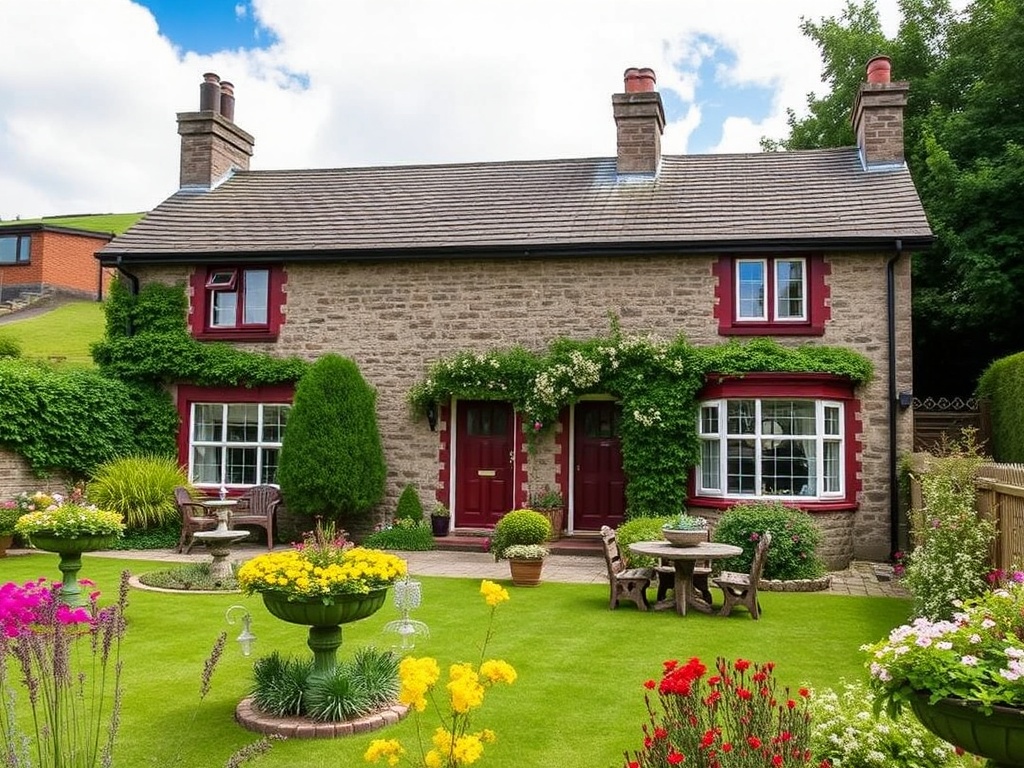
Welcome to a Home Steeped in Heritage
Nestled between the mountains of Snowdonia and the Irish Sea, Barmouth is more than a picturesque coastal town—it’s a gateway to Welsh culture. At the heart of this experience is a charming Bed & Breakfast run by Gareth and Elin Thomas, a couple devoted to keeping Welsh traditions alive through hospitality.
A Love Story Rooted in Wales
Gareth, a former history teacher from Aberystwyth, met Elin, a chef passionate about local cuisine, during a folk music festival in Bala. Their shared love for storytelling, traditional crafts and authentic Welsh living inspired them to open their own B&B in Barmouth five years ago. “We wanted to create more than just a place to sleep,” says Elin. “We wanted to offer a cultural experience.”
A Bed & Breakfast Like No Other
From the moment guests walk through the hand-carved oak doors, they’re immersed in genuine Welsh ambiance. The couple has restored the 19th-century stone house using traditional methods. Each room is decorated with handcrafted textiles, antique furnishings, and local artwork sourced from nearby villages.
What Makes Their B&B Unique?
- Breakfasts made with locally-sourced ingredients, including laverbread and bara brith
- Welsh folk music evenings by the fireplace
- Workshops on traditional crafts like wool weaving and spoon carving
- Guided walking tours in Welsh and English
“Many of our guests have never experienced this side of Wales,” Gareth explains. “We see it as our mission to change that.”
Keeping Language and Lore Alive
The Thomases place special emphasis on preserving the Welsh language. All signs in the house are bilingual, and guests are offered a mini language session during their stay. According to BBC Wales, the Welsh government has set an ambitious goal to reach one million Welsh speakers by 2050—a vision the couple proudly supports.
Storytelling sessions are held every Friday evening, where guests gather to hear tales of Celtic warriors, mountain spirits, and local legends passed down through generations. “It’s one of the highlights of their stay,” says Elin. “People come for the comfort, but they leave with stories.”
Living Sustainably in the Welsh Countryside
In addition to cultural preservation, the couple is committed to sustainability. Rainwater is collected for garden use, solar panels heat the water, and food waste is composted on-site. The B&B also partners with local farms to reduce its carbon footprint.
“Sustainability and tradition go hand in hand,” Gareth remarks. “Our ancestors lived in harmony with the land. We’re simply continuing that legacy.” This approach is in line with practices recommended by the UN World Tourism Organization, which advocates for tourism that respects both culture and environment.
Guest Testimonials: A Cultural Awakening
Visitors from across Europe and beyond have praised the B&B for its immersive experience. One guest from Belgium wrote, “It felt like I was stepping into a living museum—but with warm beds and delicious food!” Another visitor from Canada noted how “the passion of the hosts is contagious”.
Tips for an Unforgettable Stay in Barmouth
- Book early—this B&B is popular during festivals and summer months
- Ask Gareth for a guided walk along the Mawddach Estuary trail
- Don’t skip the Sunday storytelling sessions
- Try Elin’s homemade Welsh cakes—they’re legendary
If you’re planning a visit, consider reading this National Geographic guide to the Wales Coast Path for ideas on what to explore in the area.
A Walk with Gareth: History Underfoot
Gareth’s guided walks rarely go far, because Barmouth’s past is stacked up the hillside behind the harbour. His usual route starts at Ty Crwn, the round lock-up built in the 1830s to hold drunken sailors, then climbs through the old town to Dinas Oleu, the gorse-covered slope given to the National Trust in 1895 as its very first piece of land.
“People assume the Trust began with a stately home,” he says. “It began with four acres above a Welsh fishing town. That tells you something about how this coast was valued even then.” From the top he points out the shape of the story below: the harbour that once shipped Dolgellau flannel and later slate, the sites of the shipyards along the estuary shore, and the railway viaduct of 1867 that turned a quiet port into a Victorian resort almost overnight.
The walk finishes on the bridge footpath itself, halfway across the Mawddach, where he talks about Cadair Idris and the legend that anyone who sleeps on its summit wakes a poet or a madman. “Most of our guests settle for the Pony Path and a flask,” he adds.
In Elin’s Kitchen: What Goes on the Plate and Why
Where does the laverbread come from? “Not from here, and I say so. It’s gathered on the Gower and in Pembrokeshire, so I buy it tinned from a Welsh producer and fry it with oats the way my grandmother did. Honesty matters more than pretending it came off our beach.”
What is actually local? “The eggs, the lamb, the bacon and most of the cheese. I shop at the Dolgellau market and from two farms on the Llanaber side. In spring there’s wild garlic along the Mawddach Trail; in autumn it’s blackberries and the last of the plums.”
- Bara brith: tea-soaked fruit loaf, sliced thick and buttered, made with strong tea rather than anything fancy.
- Cawl: lamb and root-vegetable broth served on folk-music evenings, with crumbly cheese on the side.
- Welsh rarebit: the standard rainy-afternoon offer, with mustard and a splash of ale.
And for guests who can’t eat any of that? “Then I make something else and don’t fuss. Tradition is a table people feel welcome at, not a menu they have to pass.”
More Than Just a Stay
Gareth and Elin’s B&B offers more than comfort—it provides a window into the soul of Wales. Through language, food, music, and folklore, they’ve built a haven where tradition is not only remembered but lived.
Whether you’re a cultural explorer or simply seeking a peaceful retreat, this Barmouth gem invites you to slow down, listen, and connect—with the land, the people, and the past.