
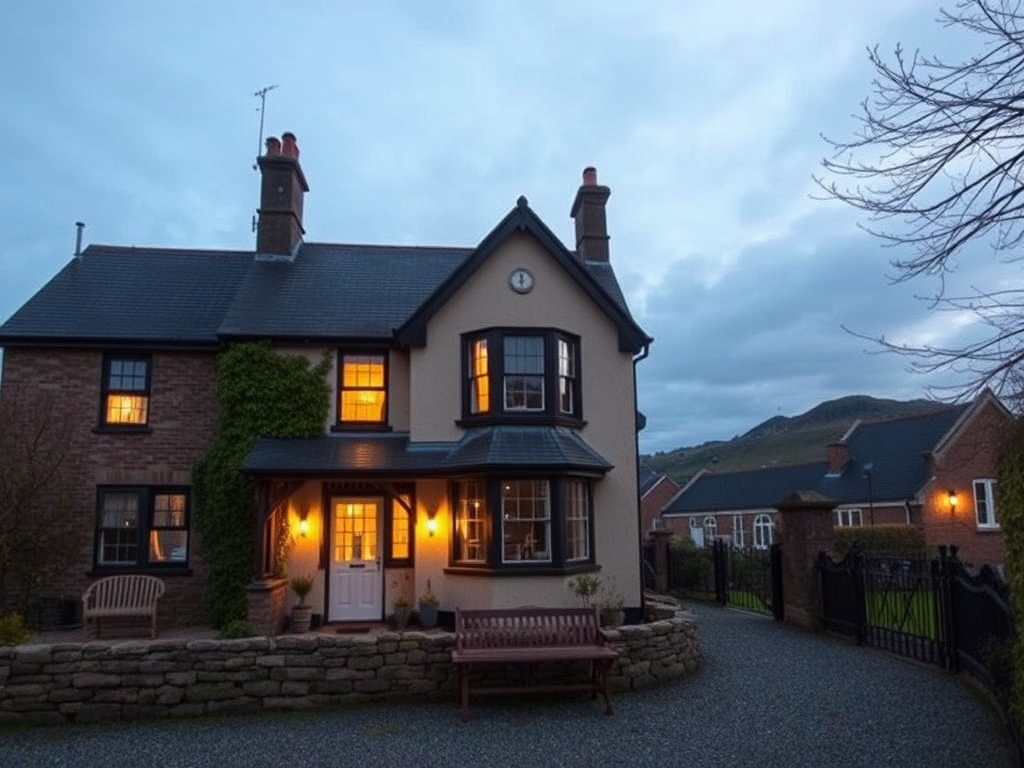
A House with a Story to Tell
Perched on a gentle slope overlooking Cardigan Bay, one Victorian-era home in Barmouth has quietly watched the tides of time ebb and flow. Originally built in the late 1800s by a prosperous slate merchant, the house bore witness to generations of local history before it was lovingly transformed into a charming bed and breakfast that now welcomes travellers from around the world.
The Restoration Journey
When Sarah and Owen Williams first walked through the creaking doors of the house in 2015, they saw more than peeling wallpaper and dusty chandeliers. They saw potential. “It had soul,” Sarah recalls. “We felt the heartbeat of the house—we just had to bring it back to life.”
Over the next two years, the couple embarked on an ambitious restoration project. Maintaining the original stone façade and woodwork, they worked closely with local craftsmen to preserve the home’s architectural integrity while introducing modern comforts. Their approach was guided by the principles of conservation-led renovation, ensuring every addition respected the building’s historic character.
Embracing Welsh Culture and Community
This B&B isn’t just a place to sleep—it’s a gateway to the heart of Welsh culture. From the locally sourced breakfast menu to the handmade wool blankets from nearby mills, every detail reflects a commitment to authenticity. Guests are often surprised by the depth of local storytelling that comes with each stay.
“We want our guests to feel like they’re part of something bigger,” Owen explains. “Not just tourists, but temporary residents of Barmouth.” The couple regularly hosts evening storytelling sessions, inviting local historians and musicians to share tales of the region’s maritime past and Celtic legends.
Voices of the Guests
Travelers who have stayed at the property often describe their experience as transformative. One guest, a writer from New York, noted that the peaceful ambiance and rich history of the house inspired her to complete the final chapters of her novel during her stay.
Another couple from the Netherlands shared how the owners’ insider tips led them to hidden waterfalls and unmarked coastal paths. “It felt like discovering a secret version of Wales,” they wrote in the guestbook.
What Makes This B&B Truly Special?
- Historic Architecture: Original fireplaces, stone walls, and antique furnishings create a timeless atmosphere.
- Locally Inspired Breakfasts: Think laverbread, bara brith, and eggs from the garden hens.
- Eco-Friendly Philosophy: Solar panels, rainwater harvesting, and minimal single-use plastics.
- Personalised Itineraries: Tailored recommendations for hikes, beaches, and artisan shops.
Tips for Planning Your Stay
Best Time to Visit
While Barmouth is beautiful year-round, spring and early autumn offer the perfect balance of mild weather and fewer crowds. The hills burst into bloom, and coastal walks are refreshingly quiet.
What to Pack
- Comfortable walking shoes for exploring the Mawddach Trail
- A raincoat—this is Wales, after all!
- A journal to capture the many moments of reflection
Nearby Hidden Gems
Ask your hosts about the lesser-known trails leading to Cregennan Lakes or the abandoned slate village of Rhosydd. These places offer both solitude and stunning views, far from the tourist crowds.
A Larger Trend in Heritage Hospitality
The story of this Barmouth B&B is part of a broader movement across the UK and Europe. Many historic homes are being reimagined as guest accommodations, preserving cultural heritage while supporting local economies. According to BBC Travel, this trend reflects a growing desire among travellers for meaningful, place-based experiences.
Even academic institutions are taking note. A recent study published by Cambridge University Press highlights how heritage tourism, when done thoughtfully, can play a critical role in cultural sustainability.
What the Restoration Actually Involved
Ask Owen about the two years of work and he begins with damp. A Victorian house facing Cardigan Bay takes the full force of the westerlies, and decades of cement pointing had trapped moisture in the stone rather than letting it breathe. The first winter was spent raking out and repointing in lime mortar, a slower and more expensive job than modern render but the only one the walls would tolerate.
The sash windows came next. Rather than replacing them, the couple had the original frames repaired, draught-proofed and re-corded by a joiner from Dolgellau. “Every builder we spoke to wanted to fit plastic,” Sarah recalls. “We would have lost the whole character of the front of the house for the sake of a few pounds on the heating bill.” The slate roof was stripped and relaid using as much of the original Welsh slate as could be saved, with the shortfall matched from a Snowdonia quarry.
- Kept: encaustic floor tiles in the hall, cast-iron fireplaces in four bedrooms, the original staircase and a cellar coal chute.
- Added: en-suite bathrooms squeezed into former dressing rooms, underfloor insulation, and wiring that no longer alarms electricians.
- Regretted: nothing structural, though Owen admits the budget ended a fair way above the estimate, as it does for almost every old house on this coast.
Reading the Town from the Front Windows
The slate merchant who built the house chose his site well. From the bay window the whole working history of Barmouth is still visible: the harbour where flannel from the Dolgellau mills and later roofing slate were loaded on to coasting schooners, the quay where the boats were built, and the railway viaduct that in 1867 brought the first holidaymakers and, indirectly, the money for houses like this one.
Sarah keeps a pair of binoculars on the sill and a tide table beside them. On a spring tide the estuary fills almost to the road; at low water the sandbanks emerge and the oystercatchers move in. Winter storms are watched from the same chair with the fire lit, and more than one guest has cancelled a day out simply to sit there.
“We found the merchant’s name in the deeds and then in the parish records,” Owen says. “He watched the same tide from the same window. Once you know that, the house stops being a project and becomes a responsibility.”
Final Thoughts
In an age of impersonal hotels and rushed itineraries, this historic bed and breakfast in Barmouth stands as a gentle reminder that travel can be slow, soulful, and deeply connecting. More than just a roof over your head, it offers stories, serenity, and a sense of place you’ll carry long after your journey ends.