
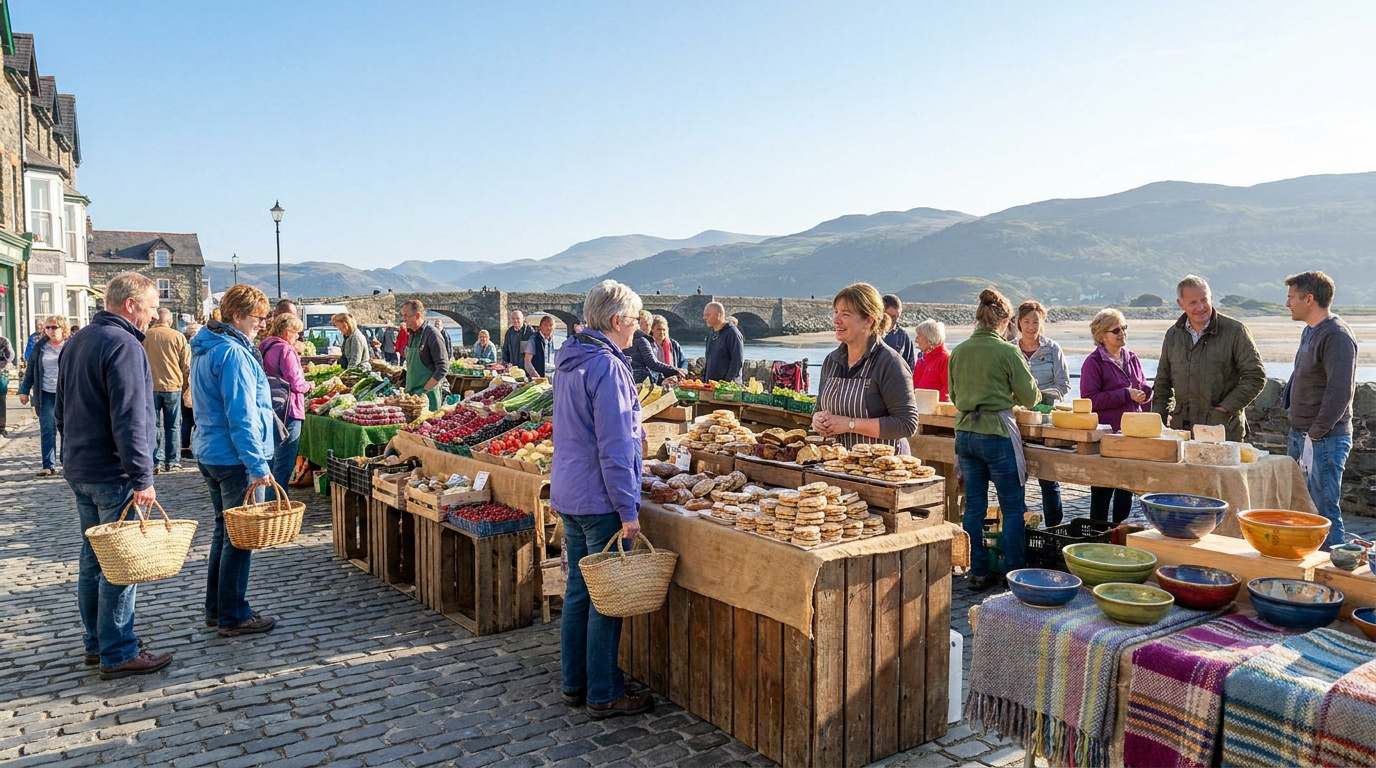
Key takeaway: Barmouth Central Market serves as a vital community hub every Thursday from 07:00 to 16:00, with Sunday extensions during summer. Located near the harbour (LL42 1DL), it offers fresh Snowdonia produce and unique Welsh crafts. Arriving before 10:00 with cash ensures the best selection of artisan goods while supporting the local independent economy.
Barmouth Central Market has served as a vital community hub for generations, drawing crowds to Bridge Street every Thursday from 07:00 to 16:00. This traditional gathering transforms the southern edge of Snowdonia into a vibrant trading post where regional farmers and independent artisans showcase the best of Welsh heritage.
Finding the right stall among the seasonal rotation of fresh produce and handmade textiles can be overwhelming for first-time visitors. This guide to the Barmouth Market Through the Seasons: A Stall-by-Stall Guide breaks down the essential logistics and top vendors to help you navigate the aisles like a local.
- Practical Guide to Barmouth Market Logistics
- 3 Essential Food Categories to Explore
- Handmade Treasures and Welsh Craftsmanship
- Are the Markets Open in the Off-Season?
- Budgeting and Transport for Your Visit
Practical Guide to Barmouth Market Logistics
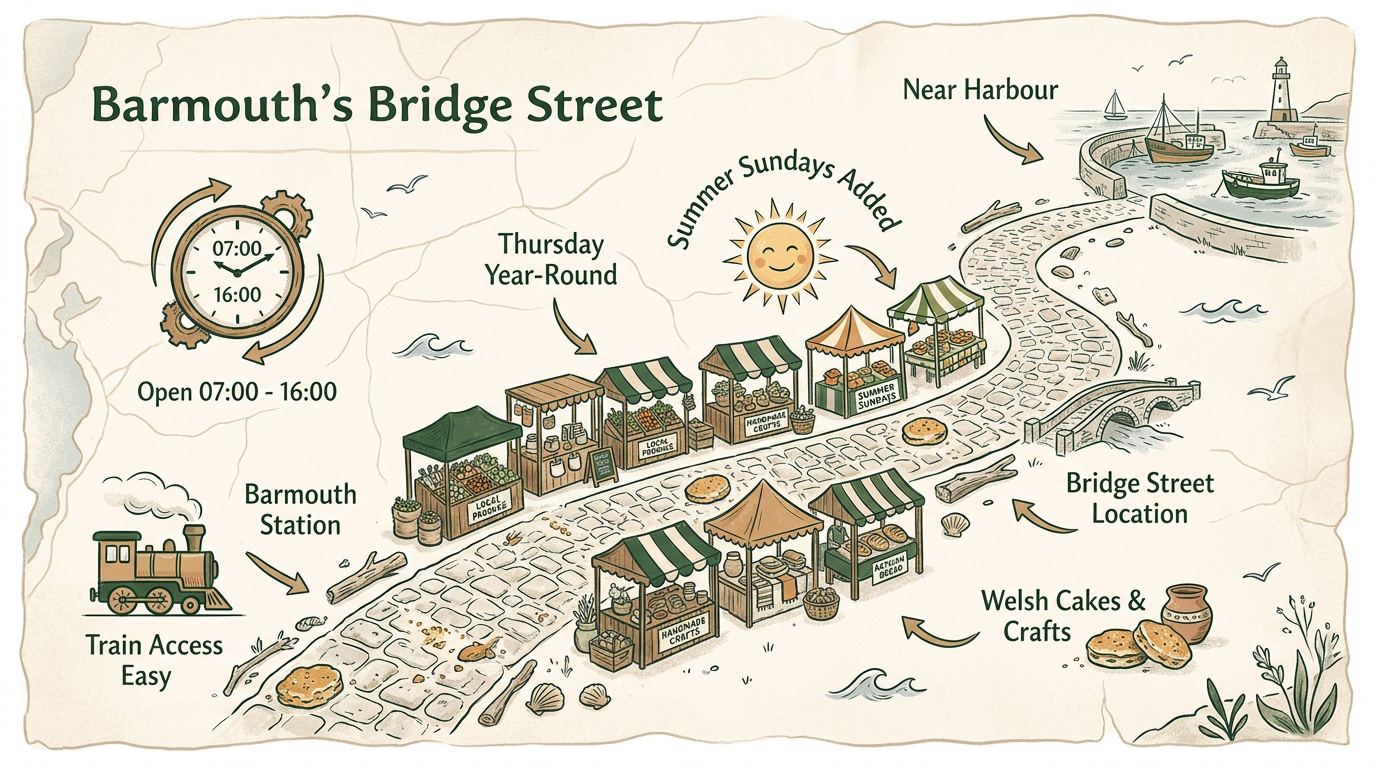
Barmouth Market runs every Thursday year-round on Bridge Street, adding Sundays in summer. Stalls open at 07:00 near the harbour, offering Welsh cakes and artisan textiles until 16:00, accessible via the local train station.
Getting the timing right is the first step to mastering Barmouth Market Through the Seasons: A Stall-by-Stall Guide.
Weekly Schedule and Seasonal Hours
The Thursday market is a deep-rooted local tradition. Early birds fill the town quickly to grab the freshest stock. During peak holiday months, a Sunday session opens up. This expansion handles the heavy summer tourist crowds perfectly.
Trading kicks off at 07:00 sharp for the keenest shoppers. Most vendors start packing their wares around 16:00. Arriving before 10:00 is my top tip for securing the best perishable goods.
Winter brings shorter days and shifting light. Stall hours sometimes contract when the Welsh weather turns grey. It is smart to check local notices during the colder, darker months of the year.
Finding Your Way to Bridge Street
You will find the stalls nestled between the town centre and the harbour. Bridge Street acts as the main artery for the event. The walk from the famous railway bridge is short and entirely flat.
Train access is incredibly convenient for visitors. Barmouth station sits just a few minutes away on foot. Buses also stop regularly near the leisure centre for those staying in the outskirts.
The physical layout follows the natural curve of the pavement. Stalls lead you directly toward the water’s edge. Navigating with a stroller is simple. Clear signs throughout the shopping area help newcomers find their way.
3 Essential Food Categories to Explore
While the logistics get you there, the real draw is the local larder waiting to be sampled.
Fresh Welsh Cakes and Artisan Honey
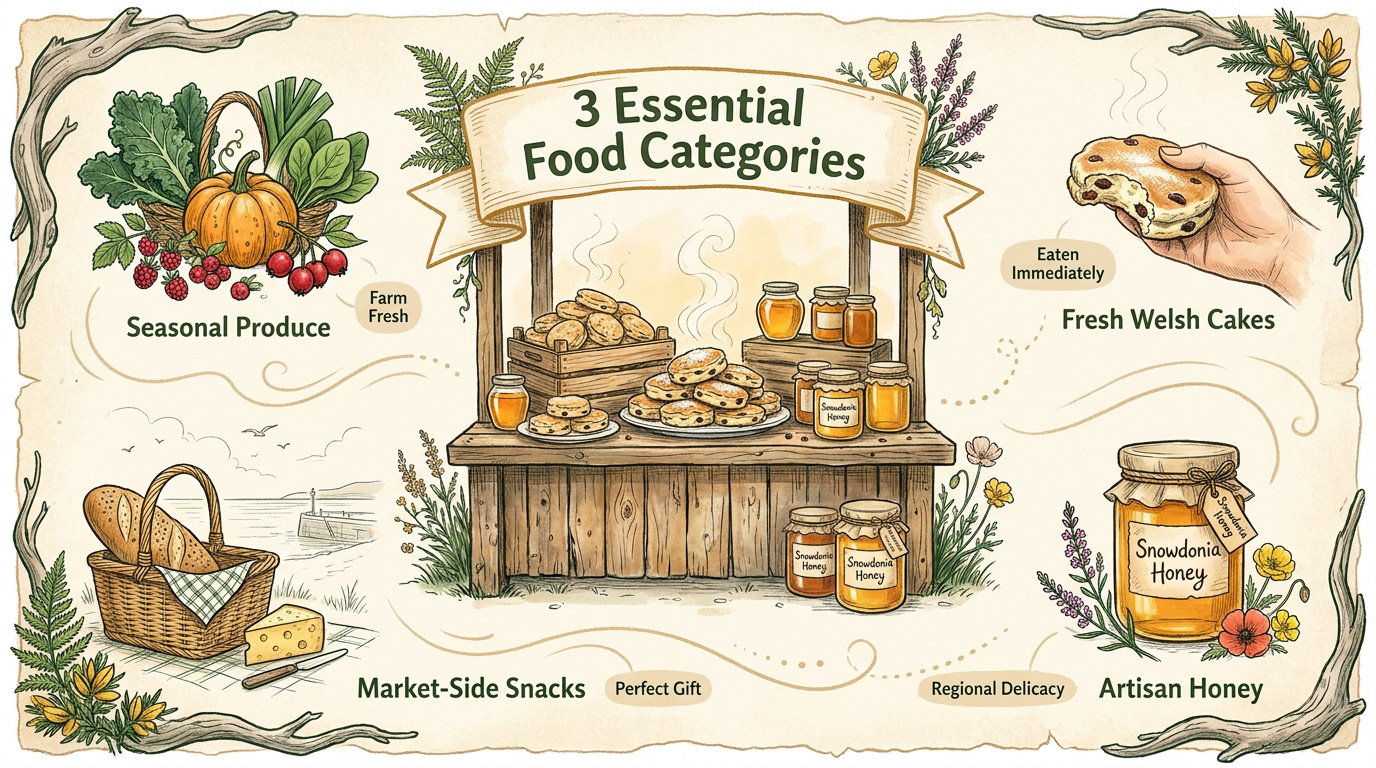
The scent of warm Welsh cakes hits you first. Bakers flip these small treats on hot griddles right before your eyes. You really should eat them immediately. Traditional recipes use local butter and plenty of dried fruit for a classic taste.
Then, look for the Snowdonia honey jars. Local beekeepers bring batches whose flavour reflects the surrounding moorland and meadow flora. Each jar reflects the specific flora of the nearby mountains. It is a pure, regional delicacy.
I suggest pairing these sweets together. A bag of cakes and a jar of honey make a perfect gift. These items are the market’s most famous edible exports for a reason. You won’t find better elsewhere.
Seasonal Produce From Snowdonia Farms
The rotating harvest dictates the stalls. Spring brings crisp greens and rhubarb. Summer offers berries, while autumn is all about root vegetables and hardy squash. The selection changes every month at Barmouth Market Through the Seasons: A Stall-by-Stall Guide.
Forget supermarket quality. These vegetables are often picked the same morning. The flavor is intense and the carbon footprint is minimal. Supporting local farmers ensures these small-scale operations continue to thrive in North Wales. It makes a difference.
Don’t overlook the organic options. Many growers avoid heavy pesticides. You can taste the difference in the soil-grown carrots and potatoes. It is honest, rugged food for the soul. The quality is truly undeniable.
Quick Bites and Market-Side Snacks
Check out the ready-to-eat stalls. Savory pies and hot rolls are popular for lunch. You can grab a coffee and watch the crowd move by. It is a social experience. The atmosphere is always buzzing.
Local cafe integration is fascinating. Nearby eateries often buy their morning stock from these very stalls. The relationship between the market and the town’s kitchens is deep. Freshness is guaranteed. You taste the market everywhere.
Why not plan a picnic? Buy some cheese and bread to take to the beach. The harbour wall is a great spot to enjoy your market haul. Just watch out for the hungry seagulls circling above. They want your lunch.
Handmade Treasures and Welsh Craftsmanship
Beyond the pantry, the market showcases the rugged creativity of the Welsh coastline through its non-edible goods.
Driftwood Toys and Coastal Textiles
Artists like Rhys scavenge the shore for unique timber. These weathered pieces become small boats or whimsical animals. Each item is entirely unique and carries the salt of the Irish Sea within its grain. It is pure coastal magic.
Traditional patterns appear on scarves and blankets. The wool often comes from sheep grazing on the Snowdonia foothills. It is heavy, warm, and built to last. You can feel the heritage in every single fiber.
You can often chat with the person who knitted your hat. This connection adds immense value to every purchase. It is shopping with a human face. In fact, these stories make the souvenir truly special.
Authentic Non-Food Souvenirs
Local clay is used to create mugs and plates with sea-inspired glazes. Hand-carved wooden spoons are another staple. These items represent true Welsh culture. They are functional art pieces for your home.
Small textiles and jewelry are easy to pack in a suitcase. Avoid the fragile ceramics if you have a long train journey ahead. Look for leather goods or small prints that fit in a backpack easily. Simple.
These are not cheap trinkets. They are heirlooms designed for daily use. Buying here supports the sustainable tourism movement in Barmouth and beyond. It keeps local traditions alive. Don’t miss out on these lasting pieces.
Are the Markets Open in the Off-Season?
While the crafts remain consistent, the energy of the market fluctuates significantly with the changing tides of the tourist season.
Summer Energy and Sunday Extensions
Summer is loud, busy, and full of life. The Sunday market is a vital addition for weekenders. It ensures that those arriving late on Friday don’t miss out on the local experience. You really feel the town’s pulse then.
The atmosphere is electric. Street performers often join the fray in July. The air smells of frying onions and sea salt. It is the town at its most vibrant and welcoming. I love that buzz.
Expect queues at the most popular food stalls. Patience is required, but the reward is a genuine slice of Barmouth life. It is worth the wait. Don’t let the crowds deter you from a good snack.
Winter Resilience and Local Community Focus
The market becomes a hub for locals. Essential household goods take center stage. It is less about souvenirs and more about community survival. The focus shifts toward what people actually need to get through the week.
Strong Atlantic gales can force a cancellation. Always check the sky before heading out in November. Most hardy traders will still set up if the wind stays below a certain threshold. Safety always comes first for the organizers.
You can talk longer with the vendors. The pace is slow and intimate. It is the best time to hear stories about the town’s history. You get a much deeper connection to the place during these quiet months.
Budgeting and Transport for Your Visit
Navigating the stalls is easier when you have the right change in your pocket and a plan for your heavy bags.
Managing Cash and Card Payments
Small vendors often favor physical cash here. Signal in the Welsh mountains can be patchy for card machines. Carrying notes and coins is the safest way to ensure you don’t miss out. It prevents awkward payment delays.
Locate the ATMs before browsing. Banks sit on the high street nearby for easy access. Don’t wait until the front of the queue to realize you are short. Most snacks cost under five pounds.
Produce bags usually cost around ten pounds. Artisan crafts vary wildly in price depending on the maker. Budgeting twenty to thirty pounds allows for a very decent haul. You will leave with plenty of local treats.
Parking Logistics and Coastal Walks
I recommend using the seafront parking. The large main lot fills up fast on market days. Arrive before 09:00 to secure a spot. It makes carrying heavy bags much easier later on.
Try the Barmouth Bridge walk afterward. Head across the estuary for incredible scenery. The views back toward the town are stunning. It is the perfect way to balance a morning of shopping with fresh air.
The train is a great alternative. If you aren’t buying heavy furniture, the rail link is stress-free. You avoid the traffic and the parking fees. It is the greener choice for a day trip.
Visit Bridge Street early to secure the finest Snowdonia produce and unique Welsh crafts before the afternoon rush. Carrying cash ensures a seamless experience at every stall. Embark on your Barmouth Market journey this Thursday to support local artisans and enjoy an authentic taste of coastal life.
FAQ
On which days can I visit the Barmouth Central Market?
The market is a year-round tradition held every Thursday on Bridge Street and near the harbour. During the busy summer months and holiday periods, additional markets are held on Sundays to accommodate the influx of visitors to our coastal town.
What are the typical opening hours for the market stalls?
Trading officially takes place between 07:00 and 16:00. While some traders begin setting up between 08:00 and 09:00, it is highly recommended to arrive before 10:00 to secure the best selection of fresh seasonal produce and unique artisan crafts before they sell out.
Where exactly is the market located and how do I get there?
You will find the heart of the action at LL42 1DL, situated between the town centre and the harbour. It is easily accessible via a short walk from the Barmouth railway station or local bus stops, and those driving can find parking along the seafront.
What kind of local goods and treasures can I expect to find?
The stalls offer a wonderful variety, ranging from fresh Snowdonia farm produce and artisan Welsh cakes to handmade driftwood toys and coastal textiles. You will also find household essentials, affordable clothing, and unique pottery inspired by the local landscape.
Should I bring cash or can I pay by card at the stalls?
It is best to carry physical cash, as many of our smaller independent traders and local farmers prefer this method of payment. While there are ATMs available on the nearby high street, having coins and notes ready ensures a smoother experience for quick bites and small souvenirs.
Is the market still worth visiting during the winter months?
Absolutely, though the experience changes. The winter market is smaller and more intimate, focusing on the local community and essential goods. While strong Atlantic gales may occasionally cause cancellations, visiting during the off-season allows for longer chats with the makers and a slower pace of life.
How much should I expect to spend on local delicacies and crafts?
Prices are very fair for the quality provided. You can typically pick up a pack of Welsh cakes for a few pounds, while jars of local heather honey usually range between £6 and £10. Handcrafted items like pottery mugs often start around £15, representing a true investment in Welsh craftsmanship.
Read next: Barmouth market opening times: plan your visit around the stalls